
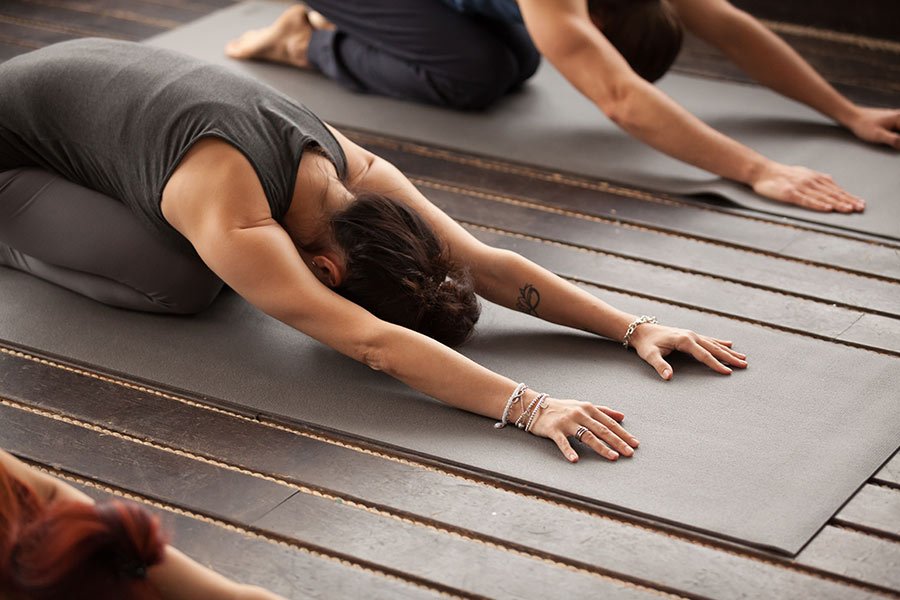
Learn how gentle yoga may support digestion, ease IBS symptoms, and calm stress. Try a safe 15-minute yoga for digestion flow from ANIKO Lifestyle & Wellness. Your brain and your gut talk all day. When stress goes up, your belly can feel tight. You may feel bloating, pain, gas, or bathroom rushes. Gentle yoga can help your body slow down. Doing so may help digestive health and gut health. Studies in people with Irritable Bowel Syndrome (IBS) show that yoga for IBS may help some people feel less stress, less tired, and better in daily life. Some studies also found lower belly swelling and lower IBS symptom scores. But not every study found the same thing. So yoga for digestion works best as a helper, not a cure. Keep your doctor’s plan. Simply add gentle yoga to it. Yoga for digestion should feel soft. Slow breaths. Small moves. Gentle twists. Rest. If a pose hurts, stop. Kind movement can be good for digestive health because it helps your body feel calm and safe. Indigestion can make you feel too full, sore, or burning in your upper belly. Yoga will not fix every gut problem, but newer studies show it may help improve symptoms – especially when stress and symptoms show up together. Duration: 15 minutes Goal: Support slow breathing, gentle movement, low strain, symptom pacing. If you have reflux, practice a few hours after a full meal. Stay upright. 1. Grounding & Breath Awareness – 2 minutes Sit on a chair or cushion. Gently place one hand on your sternum and the opposite hand on your belly. Breathe in through your nose for a count of 4. Breathe out for a count of 6. Maintain softness in your jaw. Evidence: improved symptoms and enhanced vagal activity. For people with reflux, staying upright or slightly elevated is more evidence-consistent than lying flat. 2. Cat-Cow Stretch (Marjaryasana-Bitilasana) – 2 minutes Sit in a comfortable seat, or in tabletop (moving to hands and knees, wrists under shoulders and knees under hips). Move slowly with the breath: Inhale: Drop your belly, gently lift the chest, and tailbone (Cow). Exhale: Round your spine and tuck your chin (Cat). Use a chair or countertop if wrists are sensitive. Continue flowing with your breath for 8-10 rounds. Evidence: recent IBS yoga and exercise literature supports gentle movement, low strain, and pairing motion with breath regulation. 3. Seated Side Stretch (Parsva Sukhasana) – 2 minutes Inhale: reach one arm up Exhale: lean slightly to the opposite side for 3 slow breaths. Switch. Keep the stretch light rather than intense. Evidence: Supports gentle thoraco-abdominal movement without heavy abdominal pressure. 4. Supported Child’s Pose or Chair Fold (Balasana) – 2 minutes Use pillows for support if needed. If a kneeling position feels compressive, sit in a chair and fold over with the chest resting on a table or pillows for support. This is included as a restorative downshift rather than a digestive “mechanical” pose. Choose the chair version if reflux, hernia, recent abdominal surgery, or pregnancy makes forward compression uncomfortable. Evidence: Caution is taken with reflux because positioning and lying down around meals can worsen symptoms. 5. Seated Open Twist (Parivrtta Sukhasana) – 2 minutes Inhale: Sit tall. Exhale: Turn the chest gently in one direction. Maintain an open and small, twist – not compressed or forced. Hold for 3 breaths. Switch sides. Repeat each side two more times as comfort permits. In pregnancy, keeping the twist roomy and non-compressive is prudent; later pregnancy also favors chair-based, non-supine modifications. Evidence: Supports gentle mobility and relaxation. 6. Seated Single Knee to Chest Pose – 2 minutes Sit tall with legs extended forward (Staff Pose/Dandasana) or sit in a chair with feet flat on the ground. Inhale: Lift one foot off the ground, drawing the knee up toward the chest. Interlace fingers around the shin or behind the thigh (to avoid pulling the knee joint). Exhale: Draw the knee gently in toward the chest, maintaining a straight spine. Hold for 3-5 breaths. Release and repeat on the other side. Evidence: Supports reducing stress reactivity, increasing parasympathetic or vagal activity. Weekend Retreat Vibes, Online Escape the chaos and tune into yourself with calming guided sessions—any day can feel like a retreat. UPDATE UPDATE References Vitamin C Powerhouses: Oranges, kiwi, strawberries, bell peppers Zinc-Rich Foods: Pumpkin seeds, lentils, chickpeas, cashews Probiotic Superstars: Yogurt, kefir, sauerkraut, kimchi Antioxidant Heroes: Blueberries, spinach, dark chocolate, walnuts Immune-Boosting Spices: Turmeric, ginger, garlic, cinnamon UPDATE